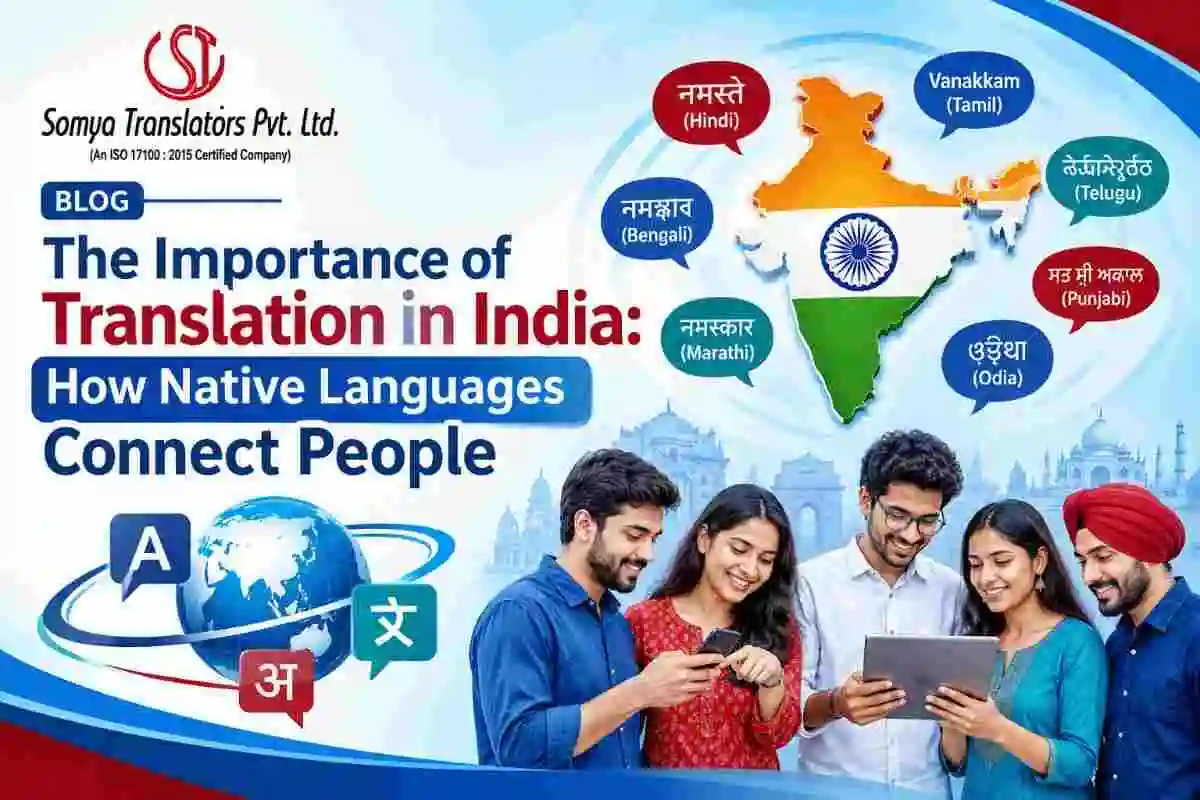
Translation matters in India because information only works when people can understand it. India recognizes 22 languages in the Eighth Schedule of its Constitution, and the 2011 Census lists 121 languages spoken across the country. A policy, medicine label, textbook or product manual written in one language leaves out everyone who reads another. Translation closes that gap.
This article explains where translation does the most work in India, from classrooms and hospitals to government offices and mobile phones, and what to look for when you need it done well.
Why Does Native Language Communication Matter?
People understand and trust information best in the language they think in. A message in a second or third language may be read, but it is easier to misread, skip or distrust.
This is why the National Education Policy 2020 encourages teaching in the mother tongue or home language, at least up to Grade 5. The idea is simple: a child learns concepts faster when the language of the classroom is the language of the home.
The same logic applies outside school. Marketing, public notices, legal agreements and website content all fail if the intended audience cannot comprehend them. Translation is what turns a message written for one group into one that works for another.
Where Does Translation Make the Biggest Difference?
Education
India’s education content, from textbooks to exam material, often originates in one language and must reach students in many. Even when a curriculum or learning framework is designed centrally, it has to be adapted state by state into regional languages before it reaches students.
Good educational translation goes beyond word replacement. Technical terms in science and mathematics need consistent equivalents across textbooks, or students end up learning the same concept under different names.
Healthcare
Healthcare is where translation errors cost the most. Patient information leaflets, consent forms, discharge instructions, prescriptions and medical device manuals all need to be understood exactly.
Regulation reflects this. Under India’s New Drugs and Clinical Trials Rules, 2019, participants in clinical trials must give informed consent, and that consent only counts if they understand what they are agreeing to, which in practice means documents in a language they know. Pharmaceutical and medical device companies exporting to other countries face the reverse problem: local regulators expect accurate documentation in their own language.
Business and Economic Activity
Companies that want to sell across states or abroad translate contracts, product descriptions, packaging, terms of service and customer support content. A trade agreement or compliance document is only as reliable as its translation, because both sides are bound by what the text says, not by what they assumed it said.
For a business, the practical benefit is reach. A product page in Tamil, Bengali or Marathi speaks directly to customers who might never read the English version.
Government and Legal Content
Citizens deal with government notices, court documents, forms and schemes that affect their rights and benefits. Legal translation needs particular care because a single mistranslated term can change the meaning of a clause. Certified translations are often required for immigration, court filings, academic records and business registration.
Technology and Consumer Devices
Smartphones, TVs, apps and appliances are used in cities and villages alike, and most users prefer to operate them in their own language. That is why device makers and app developers localize menus, voice assistants, instructions and support content. Localization also covers date formats, currency, units and cultural references, not just text.
Culture and Religion
Translation lets literature, philosophy and religious texts travel beyond the community that produced them. A reader in Kerala can read a Bengali novel, and a student abroad can study an Indian text in English. This exchange is one reason regional literature has found readers well beyond its original language.
Why Is Translation Especially Important in Rural India?
Many people in rural areas have limited access to English, yet they are the main audience for primary education, primary healthcare and government welfare schemes. If those programs are only communicated in English or in a language the community does not use, they reach fewer people than they should.
Translation here has a practical effect: a vaccination notice in the local language gets read, and one in English often does not.
Which Fields Rely Most on Translation?
| Field | What typically gets translated |
|---|---|
| Education | Textbooks, curricula, exam papers, e-learning courses |
| Healthcare and pharma | Patient leaflets, consent forms, clinical documents, device manuals |
| Legal | Contracts, court documents, certificates, agreements |
| IT and software | Apps, websites, help content, user interfaces |
| Business | Product listings, marketing material, reports, support content |
| Media | Subtitles, scripts, articles, voice-over content |
How to Choose a Translation Provider
Not every translation need is the same, so match the provider to the content.
- Check subject expertise. A medical or legal document should be handled by a translator who knows the terminology, not just the language.
- Ask about review. A second linguist reviewing the work catches errors the first one misses.
- Confirm the language pair and dialect. Language variants matter, so state your target region and audience.
- Ask about certification. Official documents may need certified or notarized translation.
- Agree on terminology. For ongoing work, a shared glossary keeps brand and technical terms consistent.
- Look for related services. Many projects also need transcription, transliteration or subtitling alongside translation.
Somya Translators Pvt. Ltd. provides translation across fields including IT, legal, documents and medical, along with transcription, transliteration and subtitling.
Conclusion
Translation is how information, services and ideas reach people who would otherwise be left out. In a country with this many languages, it is not an extra step. It decides whether a textbook is learned from, whether a patient understands a prescription, and whether a product finds its customers. If you are producing content for more than one language group, plan for translation early rather than after the content is finished.
FAQs
Why is translation important in India?
India has 22 constitutionally recognized languages and many more spoken ones. Translation makes sure education, healthcare, legal and commercial information reaches people in a language they understand.
How does translation help education in India?
It lets textbooks and curricula reach students in their mother tongue, which supports better understanding, especially in primary grades.
Why is medical translation so important?
Errors in patient leaflets, consent forms or prescriptions can affect health outcomes. Accurate translation helps patients understand diagnoses, dosage and risks.
What is the difference between translation and transliteration?
Translation converts meaning from one language to another. Transliteration converts the script or sound, for example writing a Hindi name in Roman letters, without changing the language.
What is localization?
Localization adapts content to a specific audience, including language, formats, units, currency and cultural references, so it feels natural to local users.
Why do technology companies translate their products?
Many users prefer to use devices and apps in their own language, so localized interfaces and instructions make products easier to use and more likely to sell.
When do I need a certified translation?
Certified translation is usually needed for official documents such as legal papers, academic records, immigration files and business registrations, depending on the receiving authority’s rules.
How does translation help rural communities?
It carries primary education, healthcare information and government schemes to people who have limited access to English.
What services do translation companies usually offer?
Common services include document translation, transcription, transliteration, subtitling, website localization and certified translation.
How do I choose the right translation company?
Look for subject expertise, a review process, support for your required language pair, and clarity about certification and turnaround time.