 The impact of a great idea might get lost if it is not understood!
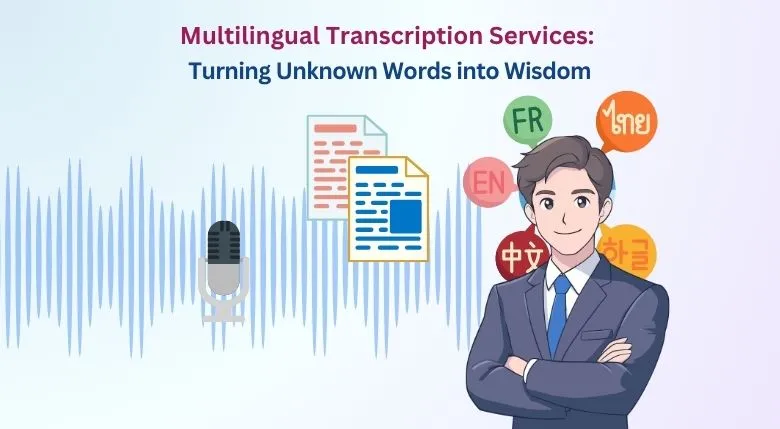
In a world that speaks thousands of languages, finding a common medium to convey a great idea or to share knowledge is difficult. This dilemma is quite common when it comes to academic webinars. Although they attract learners and participants from different corners of the world, there is no guarantee of complete comprehension due to linguistic barriers. But there is a solution! Not just a makeshift solution but an effective one: multilingual transcription services. It is a process of converting spoken content into accurate, translated text in multiple languages.
So, in essence, transcribing and then translating the spoken content in a webinar can:
- Help global institutions and individuals reach wider audiences.
- Enhance learning methods and outcomes.
- Preserve valuable information for future research.
In this blog, we will discuss the role of multilingual transcription in the present and future of academic communication.
The Evolution of Webinars from In-Person Seminars
There has been a major shift in the academic world. Over the past few years, traditional conferences and seminars have been increasingly replaced by online webinars.
The reasons?
- Reduced travel expenses
- Broader reach
- Scheduling flexibility
- Longevity due to the recording of the lecture
Since the COVID-19 pandemic, webinars have become vital for universities and research institutions. As attendance is no longer a physical presence, academic events could be easily hosted online, with attendees coming from dozens of countries.
But with this advantage also comes a hurdle. When hosting a global webinar, it becomes necessary to ensure complete comprehension, accessibility, and longevity. Professional academic transcription services help to tackle this challenge efficiently.
What Is Multilingual Transcription?
As discussed above, multilingual transcription is the process of converting audio content into accurately written texts (also known as transcription). This text is then translated into multiple languages by professional linguists.
The transcribed text also includes additional features like:
- Speaker Identification
- Timestamps
- Formatting for Readability
Finally, the aim of any multilingual transcription service is to ensure the transcript is clear and understandable by multiple language audiences. For academic webinars, professional business transcription services can provide bilingual transcription (for two languages) or multi-language transcription (for three or more).
Why Is Multilingual Transcription Vital for Academic Webinars?
There are several reasons why multilingual transcription services are necessary for academic webinars:
- Accessibility and Inclusivity: Transcription services significantly increase accessibility to knowledge. Text transcripts in multiple languages make academic content available to all types of participants who have hearing disabilities or to those who prefer reading to listening. Some studies even show that transcriptions improved global student accessibility by 85%.
- Research Documentation: In academic seminars, every conversation is a potential source of data, quotes, and citations. Accurate transcripts in multiple languages keep the content’s integrity intact and protect it for future reuse.
- Collaboration: Today, research teams have become global. In online academic collaboration, where researchers speak different languages, having a multilingual transcript can enable smoother discussions.
- Better Comprehension: Learning without understanding is just listening. Educational content that is available in a learner’s native language helps them to comprehend the information better.
- Improved Discoverability: Content that is transcribed and translated is easier to index, archive, and share. In fact, academic webinars that are transcribed multilingually see a higher engagement rate by 40–60%.
Professional transcriptions are not just limited to academics. Did you know that AI transcriptions play a big role in big data and machine learning? Check out our related blog for more information: AI Transcriptions: A Rising Trend Powering Machine Learning and Big Data.
Contact Somya Translators and Get Expert Multilingual Transcription Services at an Affordable Rate!
Contact us today and get expert Multilingual Transcription!
Challenges in Multilingual Transcription Services
Delivering high-quality transcription and translation services for academic webinars is not without its hurdles.
- Audio Quality and Multiple Speakers: Webinars can suffer from overlapping voices, background noise, unclear accents, or technical issues. Professional transcription services address this by using experienced transcribers, in-depth manual review, speaker-separation tools, and proper recording devices.
- Technology and Jargon: Academic webinars involve specialized language abbreviations, technical terms, and acronyms. While automated tools can struggle to transcribe and translate these terms, human linguists with industry expertise can provide high-quality results.
- Multiple Languages: It is not necessary that an academic webinar be conducted in just one language. Different languages would require different translators and transcribers.
- Lack of Standard Glossary: To maintain consistency in translations, having a glossary of the corresponding language is a must. But some languages, oftentimes the rare ones, do not have a reliable glossary, which makes translations difficult.
- Cultural Context: Accurate translations in multiple languages require extra attention to cultural context and idioms. For example, imagine if a lecturer in a webinar talks about a historical event that only resonates with a certain linguistic group. In this case, the translator needs to look for alternate but appropriate examples or solutions.
- Timeliness and Scalability: Some institutions hold webinars on a regular basis. This increases the demand for transcriptions. Academic transcription services with quick turnaround and efficient workflow can easily cater to this demand.
The Process of Creating Expert Multilingual Transcripts
Like any professional routine, a translator or transcriber must have a few things ready before the process starts. They are:
- A proper headset
- Reliable transcription software
- Proper recording instruments
But that’s not all. To ensure high-quality multilingual transcription results, professionals also follow an efficient procedure.
Here is the workflow to create an academic webinar with multilingual transcripts:
- Recording: The webinar is recorded with professional devices, ensuring clear speaker identification and high-quality audio.
- Transcription: An expert transcriber creates accurate transcripts in the original (source) language.
- Review and Formatting: The transcribed text is then reviewed, timestamps are added, and speakers are labelled.
- Translation and Localization: The transcript is then translated into target languages by professional linguists. In these translations, professionals also ensure cultural and contextual accuracy.
- Quality Assurance: A final check for consistency, formatting, and specific terms is conducted.
- Delivery and Integration: The multilingual transcripts are delivered in ready-to-use formats. They are also integrated into the webinar platform for easy access.
- Archive and Reuse: As the transcripts are integrated into searchable platforms, they are automatically archived for future reference, SEO benefits, and broader accessibility.
Things to Consider Before Choosing a Transcription Partner
There are some important things to keep in mind before selecting a transcription partner for academic webinars:
- Experience in academic transcription services and multi-language transcription services.
- Must have professional human linguists with subject matter expertise. Beware that some agencies might only provide automated transcriptions.
- They should follow strict data protection policies and must have relevant certifications like ISO 17100, ISO 9001, and ISO/IEC 27001.
- Must offer translation and localization for multiple languages.
- Quick turnaround and the ability to scale for continuous webinar sessions.
- Transparent and efficient process and honest pricing.
The Future of Academic Communication
The purpose of academia is to enlighten, encourage, and empower others!
As academic communication goes global, it is necessary for institutions and universities to cater to multilingual learners. The fusion of digital learning, global audiences, and multilingual engagement only increases the demand for multilingual transcription services. Furthermore, improvement in AI transcriptions with human support makes these academic transcriptions readily available with utmost accuracy.
Somya Translators, a certified translation service, embraces the future of academic communication by providing expert multilingual transcription services.
Are you planning an academic webinar and want to maximize its reach and engagement?
Turn to Somya Translators today!
Contact us via call (+91-11-43061918) or email info@somyatrans.com, or visit our website for more details:
https://www.somyatrans.com/.