Analyze any company’s digital strategy today, and you will find a common pattern—their reliance on multimedia content. From website homepages to social media handles showing explainer videos, posts, and reels, brands have shifted from the traditional method of business communication to more interactive and immersive solutions.
Today, more than 91% of marketing tools used by businesses are some kind of multimedia content. Additionally, more than 83% of global businesses believe that they get a strong return on investment by using videos for marketing.
Yet, while organizations invest heavily in producing multimedia content, such as videos, podcasts, and social media posts, they often overlook a vital step! Adapting the multimedia content for audiences across different markets. Some even assume that simply translating the script of a video or adding subtitles is enough—but is it?
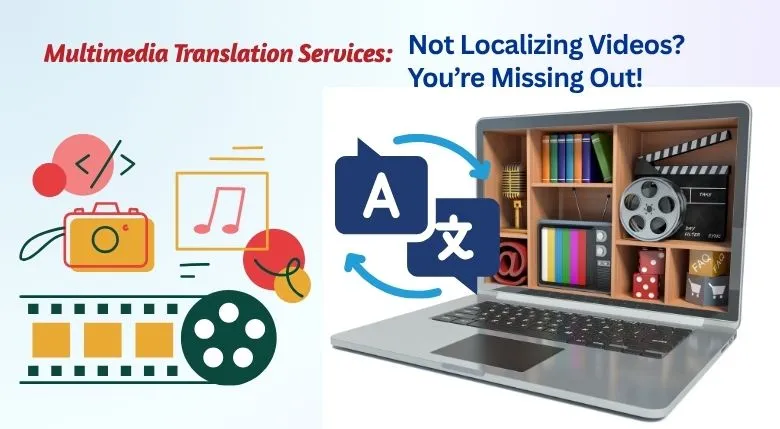
Multimedia translation services, a specialized process of adapting visually interactive content according to the region, have now become essential for global brands and their communication strategies.
In this blog, we will explore what multimedia translation services are and why they play such a vital role in shaping an effective multilingual content strategy.
Explaining Multimedia Translation Services
Multimedia translation services translate and adapt several types of content from one language into another. However, these services go beyond the language and curate visuals, synchronize audios, and customize cultural references to suit the target audience.
Brands today translate multimedia content, such as:
- Videos
- Audio Recordings
- Podcasts
- Presentations
- Interactive Digital Media
A multimedia translation company offers several solutions to ensure comprehensive experience:
- Multilingual Script Translation
- Subtitling and Synchronization
- Voiceover Recording
- Audio Editing
- Cultural Adaptation
For example, a Korean ramen company is launching a new flavor globally. To ensure hype around its product, the company created advertisements, social media posts, and demo videos. However, to ensure its efforts don’t go in vain and global audiences actually resonate with the content, the company hired a multimedia translation company. They translated the scripts into multiple languages, recorded voiceovers to clearly explain the new flavor, and adapted the social media posts to suit the cultural expectations of specific regions. This comprehensive procedure ensured that the ramen company was seamlessly able to launch its product globally without any backlash.
Why did we use a Korean company as an example? Because the art of doing business in Korea is tricky, filled with linguistic nuances and cultural expectations. Check out more on our related blog: Korean Business Translations: The Unwritten Rule of Doing Business in South Korea.
What is Included in Multimedia Translations?
Businesses use a wide range of multimedia content for various purposes. With effective translation and localization, businesses can ensure clear communication with their global audiences.
Corporate and Marketing Video Translation
Companies often translate:
- Corporate Introduction Videos
- Product Demonstrations
- Marketing Campaigns
- Customer Testimonials
These videos play a vital role in maintaining efficient brand communication. Therefore, businesses easily adapt their vital messages for their audiences by using professional multimedia localization services.
Audio Translation and Voiceovers
Audio content has exploded ever since the internet became readily available. Their popularity and use range across podcasts, online training platforms, and e-learning modules.
Audio translation services typically include:
- Translating podcasts into multiple languages
- Localizing audio modules for online training
- Narrations for educational content
Voiceovers may either replace the original audio or play alongside it. Either way, its aim is to ensure complete clarity for the viewers.
Subtitling and Captioning
One of the most common forms of multimedia content translation is subtitling. They serve two key purposes:
- Helping multimedia audiences understand spoken content.
- Improving accessibility and comprehension for viewers with hearing impairments.
However, subtitles must be carefully synchronized with the video while remaining readable.
Interactive Media Localization
Interactive content also needs to be adapted. This includes:
- E-learning Modules
- Mobile Applications
- Corporate Presentations
- Training Simulations
- Games
Professional multimedia localization services can help businesses adapt these interactive elements, so global users can have a more natural and immersive experience.
Translate All Kinds of Multimedia Content with Efficiency!
Is Scaling Multimedia Translations Challenging?
Short answer: Yes, it is challenging.
- Multimedia content involves multiple formats—video, audio, graphics, and text. Each of them requires a different translation approach and expertise.
- Preserving the context and meaning across various languages becomes more complex when videos and audio are involved.
- Synchronizing videos, timing subtitles, and aligning voiceovers are complicated processes that are difficult to perfect and scale.
- Regional references require careful adaptation in both audio and video content. Furthermore, these references keep changing according to the target language and audience.
- In high-volume multimedia content, such as e-learning modules, maintaining consistency in tone, terminology, and messages across languages and platforms can be challenging.
Balancing speed, quality, automation, and human touch remains a constant challenge for large-scale projects like movies and documentaries.
Fortunately, these challenges are not impossible to overcome. A professional translation company uses key steps during the translation process to address these challenges.
What Steps do Professional Multimedia Translation Services Use?
High-quality localized multimedia content is created after several well-implemented steps.
- Content Analysis and Script Preparation: Experts review the original content, identify multimedia elements that need translations, and prepare the scripts accordingly.
- Translation and Cultural Adaptation: Native linguists then translate the script while tweaking the cultural elements, tone, and messaging for the target audience.
- Voiceover Recording and Subtitling: Depending on the project, translators also create multilingual subtitles or record voiceovers using specialized tools.
- Editing and Synchronization: The translated audio is then synchronized with the video to ensure precise timing.
- Quality Review and Final Delivery: Finally, another set of linguistic experts conducts a thorough and deep review of the translated content to check the accuracy, cultural relevance, and technical alignment.
Following a structured workflow in multimedia content translation maintains both clarity and quality.
How to Choose a Multimedia Translation Service Provider?
Here’s a checklist to consider before selecting a multimedia translation company:
- High experience in handling multimedia translation projects.
- A diverse talent pool of native linguists and voice artists.
- Technical capabilities for video and audio editing.
- High priority to quality assurance with strong review techniques.
- Ability to handle multiple languages and high-volume projects.
Somya Translators, a reputed multimedia translation company, specializes in providing diverse solutions in 170+ languages. While multimedia remains one of the most powerful tools for business communication, it also becomes necessary to speak the language of their audiences. With our support, businesses can efficiently connect to their global audiences using multimedia content.
Are you looking to invest in multimedia translation services? Trust Somya Translators!
Contact us today for a free quote!
Call: +91-9990094796
Email: info@somyatrans.com