French is spoken by over 300 million people and is an official language in around 29 countries. For a business planning to grow in Europe, Canada, or Africa, French content is often one of the first steps. But translating into French is not as simple as swapping English words for French ones.
A campaign that works in English can sound awkward, too formal, or even confusing in French. This guide explains the most common challenges in French translation and how to handle them, so your content connects with your audience instead of confusing it.
Why Language Matters for Global Growth
Even if your product is excellent, customers rarely trust content that is not in their own language. A French-speaking buyer is more likely to engage with a brand that speaks to them naturally. Translation is therefore not just a language task, it is part of your marketing strategy.
Context matters too. Launching a French campaign in a market where French is not widely used wastes budget. Always match the language to the market you are targeting.
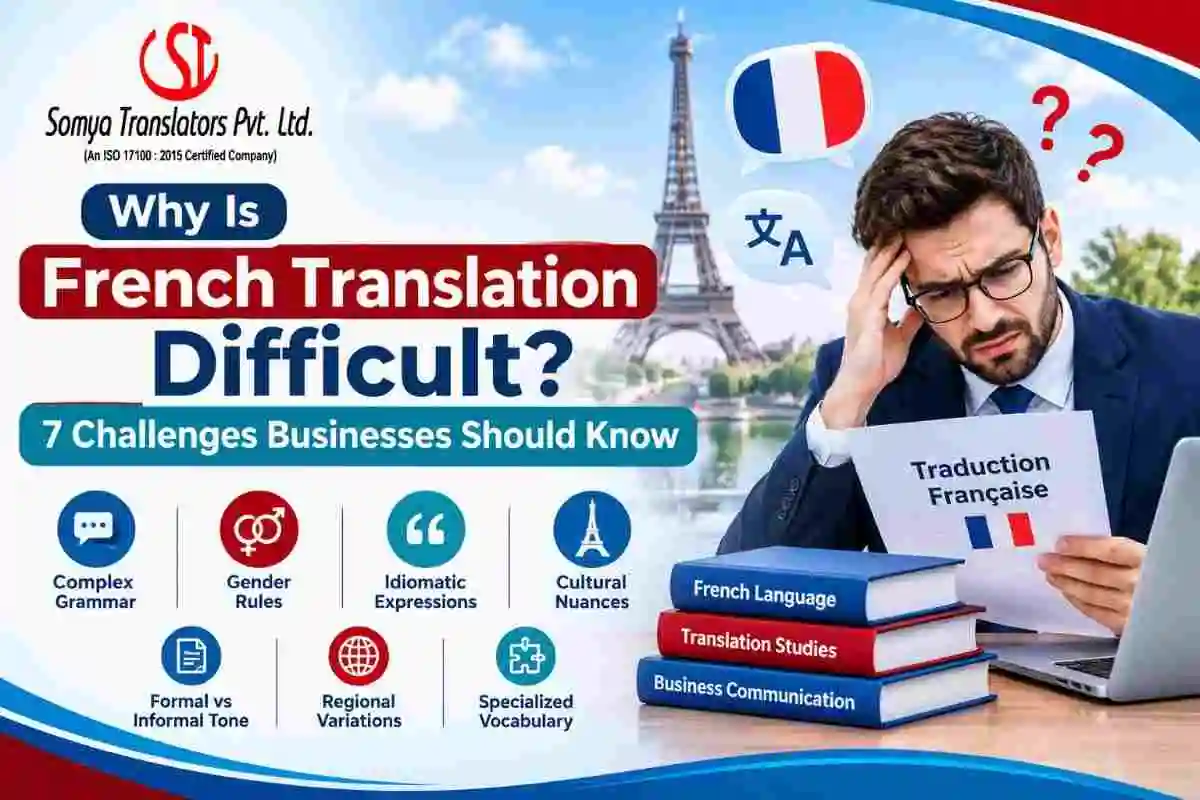
7 Common Challenges in French Translation
1. Regional Variations: France vs Canada vs Africa
French is not the same everywhere. Vocabulary, spelling, and expressions differ between France, Quebec, Belgium, Switzerland, and French-speaking African countries. A word that is natural in Paris may sound unusual in Montreal. Always decide your target region before translation begins.
2. Formal vs Informal Address (Tu vs Vous)
French has two ways to say “you.” Tu is informal and vous is formal or plural. Using the wrong one can make your brand sound disrespectful or cold. Most B2B content, legal documents, and customer support use vous, while youth-focused brands sometimes use tu.
3. Grammatical Gender and Agreement
Every French noun has a gender, and adjectives and verbs must agree with it. This is difficult when translating UI text, forms, or templates, where a single English phrase may need multiple French versions.
4. Text Expansion
French text is typically 15–25% longer than English. This can break layouts in apps, websites, brochures, and buttons. Designers should plan extra space early, and a DTP check after translation helps catch overflow issues.
5. Idioms and Cultural References
Literal translation of English slogans and idioms often produces odd or meaningless French. Marketing copy usually needs creative adaptation, not word-for-word conversion. This is where transcreation works better than direct translation.
6. Formatting and Punctuation Rules
French has its own conventions: a space before colons, question marks, and exclamation marks, and different quotation marks (« »). Numbers, currency, and dates also follow local formats, for example 1 234,56 € and DD/MM/YYYY. Small details like these decide whether your content looks native or machine-made.
7. Legal and Regulatory Requirements
Some markets have language rules for business. France requires French in many consumer-facing materials, and Quebec has strict French-language rules for commerce. For contracts, immigration papers, or official records, you may also need certified translation accepted by authorities.
Translation vs Localization: What’s the Difference?
Translation converts text from one language to another. Localization goes further and adapts tone, formats, images, and cultural references for a specific market. If you are translating a website or app, localization is usually what makes the content feel natural. For web projects, see our guide on website localization.
How to Reduce French Translation Errors
- Define your audience first. Choose the region (France, Canada, Africa) and tone (formal or informal).
- Create a glossary and style guide. This keeps brand terms and product names consistent.
- Use native, subject-expert translators. A good marketing translator and a good legal translator are rarely the same person. For sensitive areas, read about legal translation and marketing translation.
- Add a review step. A second linguist or proofreading pass catches errors that one translator can miss.
- Be careful with machine translation. It works for low-risk content, but customer-facing and technical content needs human review. Learn how MTPE combines both.
- Follow a clear process. A structured workflow, like this translation process, keeps quality predictable.
Also read: How to Translate Text from French into English? | How Do You Select the Best Corporate Translation Service?
Frequently Asked Questions
Is French translation difficult?
It can be, mainly because of gender agreement, formality levels, regional differences, and cultural nuance. Straightforward text is easy, but marketing, legal, and technical content needs skilled human translators.
What is the difference between French from France and Canadian French?
They differ in vocabulary, expressions, spelling in some cases, and legal requirements. Content for Quebec should be adapted specifically for Canadian French.
Can I use Google Translate for French content?
It is fine for understanding the gist of a text. For business, legal, or public-facing content, human translation or post-editing is safer.
Does French translation make text longer?
Yes, usually by 15–25%, so layouts should allow extra space.
Final Thoughts
French translation is manageable once you know where the problems are: regional differences, formality, gender, layout, culture, and regulations. Plan for these early and your content will read as if it was written for French readers in the first place.
If you need expert help with this, our team offers professional French translation for businesses, or you can get an instant quote.