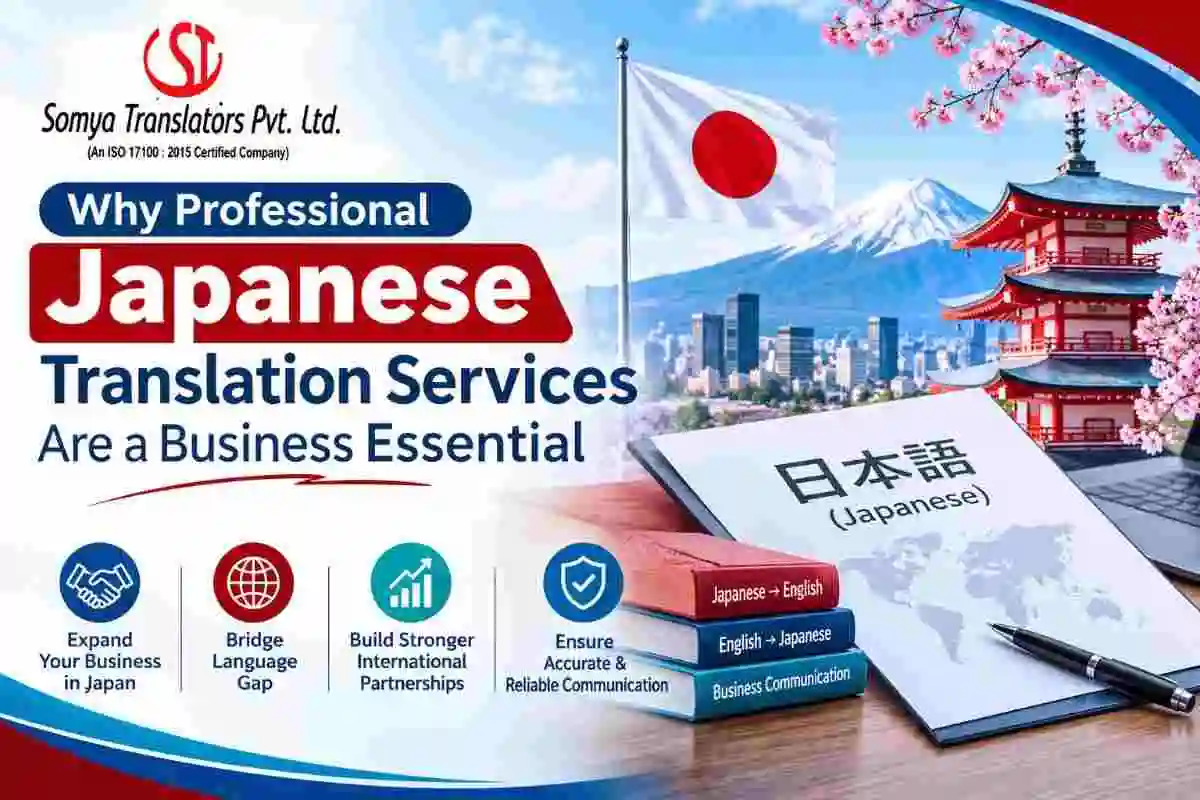
Japan is one of the world’s largest economies, and every year companies across the globe do business with Japanese partners, distributors and customers. But entering this market takes more than a good product. Japanese is very different from English in script, grammar, politeness levels and business etiquette, so a literal translation rarely works. If you are planning to sell, partner or expand in Japan, professional Japanese translation services are a business requirement, not an optional extra.
In this guide, you will learn why accuracy matters, what a good agency does differently, and how to choose the right language partner.
Why Japanese Is Hard to Translate Well
Japanese is not just “another language”. It uses three writing systems (Kanji, Hiragana and Katakana), and its sentence structure is very different from English. It also has layers of formality (keigo) that change depending on who you are speaking to.
A small mistake in tone can make a message sound rude, too casual or untrustworthy. In Japanese business culture, where trust and respect carry great weight, that can cost you a deal. This is why machine-only or low-cost translation often creates more problems than it solves.
What Happens When Japanese Translation Goes Wrong
Poor translation can cause real business damage:
- Contract disputes from unclear or incorrect wording in agreements
- Lost credibility when marketing copy sounds unnatural to local readers
- Compliance risks when product, safety or legal documents are inaccurate
- Wasted budget on content that has to be redone from scratch
For legal and financial documents, accuracy is non-negotiable. Specialised support such as legal translation and banking and finance translation ensures the exact meaning, terminology and format are preserved.
Why Choose a Professional Translation Agency
Hiring a professional agency gives you more than word-for-word conversion. A reliable agency typically provides:
- Native-level linguists who understand both English and Japanese, plus your industry terminology
- Subject-matter expertise in areas like legal, medical, IT, automotive and e-commerce
- A structured workflow covering translation, editing and final quality checks
- Consistency through glossaries and style guides across all your content
- Cultural adaptation, so your message feels natural to Japanese customers
At Somya Translators, every project follows a defined translation process supported by clear quality measures and tools, with a second linguist reviewing the work through our proofreading and editing services. Formatting, grammar and terminology are all checked before delivery.
Also read: How Japanese Translation Services Build Bridges to Success
Translation vs. Localization: Know the Difference
Many businesses use these terms interchangeably, but they are not the same.
- Translation converts text from one language to another accurately.
- Localization adapts content to the culture, habits, formats and expectations of the Japanese market, including date formats, currency, imagery and tone.
If you are launching a product or website in Japan, localization usually delivers better results. Depending on your goals, you may need:
- Website localization for your Japanese-language site
- Software localization for apps and platforms
- Transcreation for slogans and creative campaigns where a direct translation would not work
- Game localization for the huge and demanding Japanese gaming audience
Services You May Need for the Japanese Market
Depending on your business, you may need more than document translation:
- Certified translation for official, legal or immigration-related documents
- Interpretation services for meetings, negotiations and events
- Marketing translation for brochures, ads and campaigns
- IT and software translation for technical documentation and UI content
- E-commerce translation for product pages and listings
How to Choose the Right Japanese Translation Company
Before you hire an agency, check the following:
- Experience: How long have they worked with Japanese, and in your industry?
- Native linguists: Are translators native Japanese speakers with subject expertise?
- Quality process: Is there a multi-step review, not just one translator?
- Credentials: Check their certifications and memberships.
- Confidentiality: Will they protect your sensitive business documents?
- Communication: Will you have a dedicated point of contact until delivery?
- Technology: Do they use translation memory and AI-assisted workflows responsibly, with human review? See our AI-powered human translation (AIHT) approach.
Not sure what makes us different? Here is why businesses choose Somya Translators.
Expanding Across Asia?
If Japan is part of a bigger Asian expansion plan, the same standards apply to other markets. We also offer Korean translation services and Chinese translation services, so you can manage multiple languages with one trusted partner.
Frequently Asked Questions
Why is professional Japanese translation important for business?
Japanese business communication depends heavily on accuracy, politeness and cultural context. Professional translation helps you avoid misunderstandings, protect your brand image and build trust with Japanese clients.
Can I use machine translation for Japanese?
Machine translation can help with basic understanding, but it often fails on tone, honorifics and context. For contracts, marketing and customer-facing content, human review is strongly recommended. Our MTPE services combine speed with professional editing.
What is the difference between translation and localization?
Translation changes the language. Localization also adapts the content to local culture, formats and user expectations so it feels natural to Japanese readers.
Do you provide certified Japanese translations?
Yes. Our certified translation services cover official and legal documents that require formal certification.
How much does Japanese translation cost?
Pricing depends on word count, content type, subject complexity, turnaround time and whether extra services like review or DTP are needed. The easiest way to know is to get an instant quote.
Conclusion
Japan offers big opportunities, but only to businesses that communicate with accuracy and cultural awareness. The right translation partner protects your reputation, speeds up your market entry and helps you build long-term relationships with Japanese customers.
Somya Translators Pvt. Ltd. is a professional Japanese translation agency that supports both written and verbal communication with accuracy and care.
Ready to enter the Japanese market? Request a free quote or contact our team to discuss your project.