

Trying to enter the Korean market? Do you have the right product and the right strategy? Would it be enough? No, it won’t.
South Korea is among the top 10 economies in the world with a GDP of about $1.6 trillion. Boasting a high GDP is enticing for global businesses that enter the Korean market with high ambitions. However, sometimes, they underestimate the power of the Korean language. In South Korea, language plays a role beyond communication. It shapes respect, clarity, and context, especially during business dealings.
Given the growing market influence of South Korea and the importance of the local language, the demand for accurate Korean translation service has increased across several industries.
But which industries need them the most and why? Let’s explore the reasons in this blog.
Demand for Korean Language Translation Services
The rise of Korean language translation services is driven by strong economic and cultural influence.
- South Korea as a Global Hub: As one of the world’s top economies, South Korea is a leading market in technology, media, automotive, and electronics.
- Digital Dominance: South Korea has a 93% internet penetration. Furthermore, the majority of digital users prefer to engage with content in the Korean language.
- Global Brand Influence: Multinational companies, such as Samsung, Hyundai, and LG, are benchmarks of their respective industries.
- Cultural Expansion: The rise of Korean entertainment, also known as the Hallyu wave, drives engagement across the globe.
Even with such high global influence, Korean remains the language of communication for businesses. Complex negotiations, marketing, and corporate discussions are all done in the local language, making Korean language translation services vital.
Which Industries Require Korean Translation Services?
1. IT and Software Industries
The Korean tech industry is highly advanced and fast-moving. Any foreign IT or tech company that is entering the Korean market must prioritize Korean localization services.
They need to ensure:
- Full-scale software and platform localization.
- UI/UX translations for apps and websites.
- Technical adaptation for all SaaS product reports.
- Precise translation for all technical documents.
2. E-Commerce and Retail
South Korea’s e-commerce industry is rapidly growing globally. Korean consumers, today, expect clarity and cultural respect, along with new retail products.
Key areas that require Korean translations are:
- Product descriptions
- Website content
- Customer support communication
- Checkout pages and payment interfaces
Translating into Korean is one thing; culturally adapting the content is a whole other domain. Colors, visuals, tone, and phrases must align with Korean consumer preferences.
Why? Because a culturally mismatched product page on an e-commerce website feels offensive and untrustworthy. On the other hand, a website localized by Korean language translation services boosts trust and conversions.
3. Healthcare and Medical Industry
Accuracy is one of the most vital pillars in healthcare.
Translation of medical content involves:
- Medical reports
- Patient dossiers
- Clinical trial documents
- Regulatory compliance documents
A small error during medical document translation can lead to life-impacting, serious consequences.
Therefore, it is essential to only work with highly specialized linguists who understand both the Korean language and medical terminology.
4. Legal and Financial Services
Legal and financial sectors may be poles apart, but they both rely on precision and compliance.
Some commonly required documents are:
- Contracts and agreements
- Financial statements
- Compliance documents
- Annual reports
It is important to remember that mistranslated terms can lead to legal disputes or heavy financial loss.
Hence, professional language translation services with legal and financial expertise are essential to ensure accuracy and avoid risks.
5. Manufacturing and Automotive Industry
Among other industries, South Korea is also a global leader in manufacturing and automotive production.
Some documents that need translations include:
- Technical manuals
- Safety guidelines
- Product specifications
- Supplier communication
Inaccuracy in translations for this industry can lead to operational issues and safety risks. Hence, businesses must rely on precise Korean translations to maintain both quality and compliance.
6. Media, Entertainment, and Gaming
Korean culture is on a global rise. This rise has increased the demand for Korean-to-English translation services.
Some key services for this domain include:
- Subtitling and dubbing
- Game localization
- OTT platform content localization
- Marketing and promotional material transcreation
As the Hallyu wave is driving global engagement, Korean localization services ensure that the content is relevant to international audiences and vice versa. They also maintain cultural authenticity.
Netflix, an OTT giant, perhaps implemented the localization steps perfectly. This even included the hit Korean show, “Squid Game.”
Explore Netflix’s localization approach in our must-read blog: Localization Services: Netflix’s Strategy for Global Success.
What Benefits Do Businesses Get from Korean Translation Services?
Businesses derive measurable advantages by investing in reliable Korean translation services.
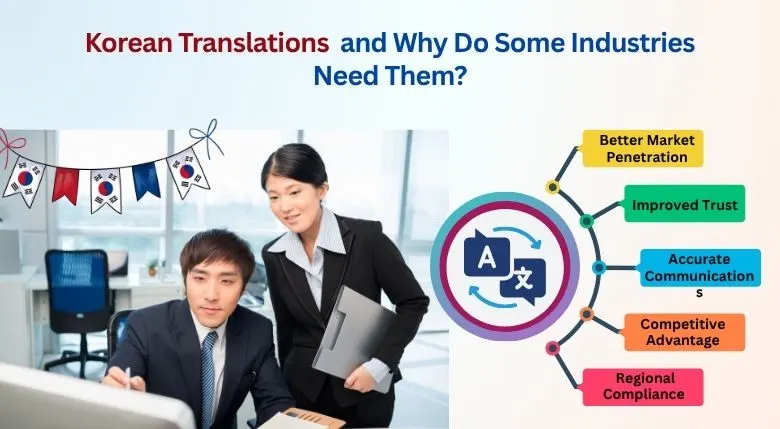
- Better Market Penetration: By translating marketing content into Korean, businesses have a much better chance of engaging with local customers.
- Improved Trust: Speaking in the native language strengthens trust and builds long-term relationships globally.
- Accurate Communications: Professional Korean language translation services also help businesses avoid any mishaps in their communication strategy.
- Competitive Advantage: Localizing content into the Korean language and culture gives foreign businesses a distinct advantage and helps them scale much more efficiently.
- Compliance With Local Regulations: Native Korean translators help global companies adhere to local business practices and laws.
Understanding niche Korean business etiquette is necessary for an outside company to operate in South Korea. Check out our informative blog to know more about these etiquettes: Korean Business Translations: The Unwritten Rule of Doing Business in South Korea.
Translate Your Content into Flawless Korean!
Let’s Select a Korean Translation Company
Any company that dreams of doing business in South Korea must start by selecting a reliable translation service provider.
Here’s what to look for:
- Native Korean Linguists: Professional companies, like Somya Translators, work with native translators who understand the cultural nuances and replicate them during translations.
- Industry-Specific Expertise: Somya Translators’ reliability hinges on the ability to offer specialized translation services, such as medical, legal, and technical.
- Strong Quality Assurance Process: Having a robust quality assurance process and using advanced QA tools are vital elements of a professional Korean translation company.
- Use of Advanced Translation Tools: Somya Translators use modern CAT tools to ensure complete accuracy, consistency, and cultural relevance.
- Proven Past Experience: Somya Translators even have past experience translating into the Korean language, which demonstrates reliability and high capabilities.
People Also Ask
Q1) Are Korean honorifics vital, especially for business translations?
Ans. Yes, they are vital. Korean uses layered honorifics to represent hierarchy and respect. Incorrect usage in business translations can unintentionally offend local clients or damage business relationships.
Q2) Why is cultural adaptation as important as translation in Korea?
Ans. They are equally essential because Korean consumers respond positively to culturally aligned messages. This is something that a direct translation without localization might fail to address.
Q3) What makes Korean technical translation so challenging?
Ans. Technical translations in the Korean language are challenging because of the language’s complex structure, industry-specific terminology, and differences in sentence order.
Wrapping Up
In the end, we come back to the very first question asked.
Looking to expand into the Korean market? You would need more than a good strategy. You would need reliable Korean translations. Reliable translations help with clarity, cultural relevance, and linguistic precision.
If you are looking to take that step into the Korean market, working with experts like Somya Translators becomes absolutely vital.
Explore how our Korean translation services can help you enter South Korea with confidence.
Contact us for a free quote today!
Call: +91-9990094796
Email: info@somyatrans.com