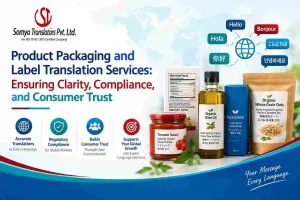
Product packaging and labels are more than design elements. They carry essential information that consumers rely on every day ingredients, usage instructions, safety warnings, nutritional details, allergens, and legal declarations. When products cross borders or serve multilingual markets, accurate translation of this information becomes critical. Errors can lead to consumer confusion, regulatory penalties, product recalls, or damage to brand reputation.
This is why specialized product packaging and label translation services exist. These services focus on converting packaging text and label content into target languages while meeting strict regulatory requirements, fitting design constraints, and maintaining clarity for end users. For companies operating in or exporting from India, product packaging and label translation services in India play a particularly important role, given the country’s diverse languages and its position as a major manufacturing and export hub. Food label translation services in India are especially in demand because of detailed rules around ingredients, allergens, and nutritional information.
Why Accurate Packaging and Label Translation Matters
Labels serve multiple purposes at once. They inform consumers, help them make safe choices, and satisfy legal obligations in each market. A mistranslated allergen warning or incorrect unit of measurement can create real risks. Regulatory bodies in different countries enforce specific rules about what must appear on packaging, the languages required, font sizes, and placement of information.
For example, food products sold in the European Union must follow detailed allergen and nutrition labeling rules. In the United States, FDA requirements apply. In India, FSSAI regulations govern food labeling, often requiring information in English or Hindi and sometimes regional languages. Exporters and importers need translations that satisfy these varying standards without compromising readability or design.
Beyond compliance, clear labels build trust. Shoppers are more likely to choose products when they can easily understand the information in their preferred language. In competitive retail environments, well-translated packaging can support stronger market acceptance.
Key Benefits of Professional Product Packaging and Label Translation Services
Working with experienced providers delivers several practical advantages:
- Regulatory compliance – Accurate translations help meet local labeling laws, reducing the risk of customs delays, fines, or forced recalls.
- Consumer safety and clarity – Correct rendering of ingredients, allergens, dosage instructions, and warnings protects users and reduces liability.
- Brand consistency – Professional teams maintain the intended tone and messaging while adapting content appropriately for each market.
- Design and space management – Translators and localization specialists account for text expansion or contraction so translated content still fits the packaging layout.
- Faster market entry – Ready, compliant multilingual labels speed up product launches in new regions.
- Support for diverse product categories – Services cover food and beverages, cosmetics, pharmaceuticals, household goods, electronics, and more.
For businesses focused on the Indian market or Indian language pairs, product packaging and label translation services in India combine linguistic expertise with familiarity with local regulations such as those from FSSAI and Legal Metrology rules. Food label translation services in India specifically address the detailed requirements for nutritional tables, vegetarian/non-vegetarian symbols, and allergen declarations.
What These Services Typically Cover
A comprehensive product packaging and label translation offering usually includes several interconnected elements:
Label content translation
This covers product names, ingredient lists, nutritional information, usage directions, warnings, storage instructions, manufacturer details, batch codes, and expiry information.
Regulatory adaptation
Translators and reviewers ensure the content meets the specific rules of the target market, including mandatory statements, order of information, and language requirements.
Food-specific expertise
Food label translation services in India and other markets pay close attention to allergen lists, additive names, nutrition facts panels, and claims (such as “organic” or “gluten-free”) that may have strict legal definitions.
Multilingual packaging design support
Many projects require coordination with designers or desktop publishing specialists so the translated text fits the available space, maintains hierarchy, and works with graphics or branding elements.
Quality assurance processes
Reliable providers use native linguists with subject knowledge, terminology glossaries, multiple review stages, and sometimes in-country review to catch issues before printing.
Ongoing updates
Formulations change, regulations evolve, and new markets open. Continuous support helps keep labels current across product lines and languages.
Practical example: An Indian spice exporter preparing shipments for the Middle East and Europe needs accurate Arabic and multiple European language versions of ingredient lists, allergen statements, and cooking instructions. A specialized team ensures the translations meet both cultural expectations and regulatory standards while fitting the existing packaging design.
Another common scenario involves cosmetic or personal care brands expanding into Southeast Asia. Ingredient names, usage warnings, and claims must be rendered precisely to avoid compliance problems and to communicate effectively with local consumers.
Practical Considerations When Choosing a Provider
Look for experience with packaging and label work rather than general document translation. Industry knowledge matters—food, pharma, and chemicals each have specialized terminology and rules. Ask about quality processes, familiarity with target-market regulations, and ability to handle design files or collaborate with packaging teams.
Turnaround times, volume capacity, and data security also count, especially when handling proprietary formulations or upcoming product launches. Many companies benefit from building a terminology database and style guide early so consistency improves across future projects.
Frequently Asked Questions About Product Packaging and Label Translation Services
What is included in product packaging and label translation services?
These services cover translation and localization of all text on packaging and labels—ingredients, instructions, warnings, nutritional data, and legal declarations while addressing regulatory and design requirements.
Why is professional help better than machine translation for labels?
Machine output often misses regulatory nuances, technical terms, and space constraints. Professional review ensures accuracy, compliance, and usability.
How do product packaging and label translation services in India support exporters?
They provide expertise in Indian and international languages, familiarity with FSSAI and other local rules, and cost-effective capacity for high-volume packaging projects.
What makes food label translation services in India particularly important?
Food labels must meet strict rules on allergens, nutrition information, ingredients, and language. Specialized services help brands stay compliant for both domestic and export markets.
Which regulations commonly affect packaging translations?
Examples include FSSAI in India, FDA rules in the US, EU food information regulations, and various national requirements for cosmetics, chemicals, and pharmaceuticals.
How do translators handle text that expands in other languages?
Experienced teams work with designers or use desktop publishing skills to adjust layouts, font sizes, or text placement so the design remains balanced and readable.
Can these services handle multiple languages for the same product?
Yes. Many projects require several language versions on the same pack or separate regional packs, managed through consistent terminology and quality processes.
What types of products most often need these services?
Food and beverages, cosmetics, pharmaceuticals, household cleaners, supplements, and consumer electronics frequently require accurate multilingual packaging.
How long does a typical packaging translation project take?
Timelines vary with volume, number of languages, and complexity. Simple labels may be completed quickly; multi-language product ranges with design adjustments take longer.
How can companies maintain consistency across product lines?
Creating approved glossaries, style guides, and translation memories helps ensure the same terms and tone appear on every label over time.
Looking Ahead
Clear, compliant packaging and labels form a quiet but essential part of successful product distribution. When information is accurate and easy to understand in the languages consumers expect, brands reduce risk and improve the buying experience. Product packaging and label translation services make this possible by combining linguistic skill, regulatory awareness, and practical attention to design.
For companies serving Indian consumers or exporting from India, product packaging and label translation services in India and specialized food label translation services in India offer relevant expertise and efficient support. Investing in professional translation at the packaging stage helps products reach shelves ready for local markets, protects consumers, and supports smoother international growth. Accurate labels are not just a regulatory checkbox; they are a practical foundation for trust and long-term market presence.