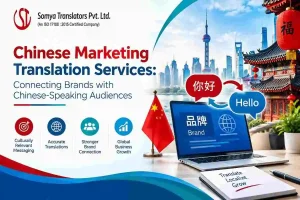
Marketing succeeds when the message feels natural to the audience. For brands targeting Chinese-speaking consumers whether in mainland China, Taiwan, Hong Kong, Singapore, or diaspora communities literal translation rarely works. Slogans lose their punch, cultural references fall flat, and calls to action miss the mark. This is exactly why specialized Chinese marketing translation services exist. They adapt promotional content so it resonates culturally, linguistically, and emotionally while protecting brand identity.
Businesses in India and beyond increasingly rely on Chinese translation services in India to reach this massive market efficiently. These services combine native linguistic skill with marketing insight, helping companies launch campaigns that feel local rather than imported.
Why Chinese Marketing Translation Requires Specialized Expertise
Chinese is not a single uniform language for marketing purposes. Mainland China primarily uses Simplified Chinese characters, while Taiwan, Hong Kong, and many overseas communities prefer Traditional Chinese. Beyond the script, regional preferences, idioms, and cultural values differ. A campaign that works in Shanghai may need adjustments for Taipei or for Chinese speakers in Southeast Asia.
Marketing content carries emotional weight. Product names, taglines, social media posts, email campaigns, and advertisements must evoke the right feelings. Colors, numbers, and symbols carry specific meanings in Chinese culture—red for luck and prosperity, the number 8 for good fortune, certain animals or phrases that signal prestige or harmony. Professional Chinese marketing translation services account for these layers so the final message builds connection instead of confusion.
Key Benefits of Professional Chinese Marketing Translation
Working with specialists delivers clear advantages:
Cultural resonance – Content feels authentic rather than translated. This builds trust faster and improves engagement rates.
Brand consistency with local relevance – Core brand values stay intact while the expression adapts to Chinese consumer expectations.
Higher campaign performance – Localized ads, product descriptions, and social content typically generate better click-throughs, shares, and conversions.
Reduced risk of missteps – Avoiding awkward or offensive translations protects reputation in a market where word-of-mouth and social proof matter greatly.
Better platform performance – Content optimized for WeChat, Douyin, Xiaohongshu, Weibo, or Baidu performs more effectively when language and tone match platform norms.
Support for both outbound and inbound strategies – Indian companies exporting to China or Chinese brands entering India both benefit from accurate, culturally aware marketing language.
For companies based in or operating from India, Chinese marketing translation services in India often provide an efficient combination of native Chinese linguists, competitive pricing, and understanding of both Indian business contexts and Chinese market realities.
What Chinese Marketing Translation Services Typically Cover
A comprehensive Chinese marketing translation services offering goes well beyond converting text. Common offerings include:
Transcreation of creative content
Slogans, headlines, and advertising copy are reimagined rather than translated word-for-word. The goal is to produce the same emotional impact in Chinese that the original achieved in the source language.
Website and landing page localization
Product pages, category descriptions, banners, and calls-to-action are adapted for Chinese users, including considerations for mobile-first browsing habits common in the market.
Social media and digital campaign content
Posts, captions, hashtags, and short-form video scripts are tailored for platforms popular with Chinese audiences. Tone, length, and visual references are adjusted accordingly.
Print and offline marketing materials
Brochures, catalogs, packaging text, trade-show materials, and point-of-sale displays receive careful linguistic and cultural review.
Email marketing and CRM content
Subject lines, body copy, and offers are refined so they feel personal and relevant rather than generic.
SEO and SEM adaptation
Keywords are researched for Chinese search behavior (especially Baidu in mainland China) and integrated naturally into titles, meta descriptions, and body content.
Multimedia support
Subtitles, voice-over scripts, and on-screen text for videos and presentations are localized with the same attention to tone and cultural fit.
Many providers also create and maintain client-specific glossaries and style guides so brand terminology remains consistent across campaigns and over time.
Practical Insights from Real Marketing Challenges
Consider a global consumer electronics brand launching a new smartphone in China. The English campaign emphasized individual expression and cutting-edge features. A direct translation risked sounding overly individualistic in a culture that often values harmony and group benefit. Skilled translators and transcreators reframed the messaging around family connection, smart living, and status, while keeping the product’s technical strengths clear. The adapted campaign aligned better with local values and performed strongly.
In another example, an Indian fashion exporter wanted to promote ethnic-inspired collections to Chinese buyers. Product descriptions needed to highlight craftsmanship and modern versatility without relying on Indian cultural references that would not land. Chinese marketing translation services helped create copy that spoke to Chinese preferences for quality, design, and occasion-based dressing.
Even small elements matter. Product names, limited-time offers, and urgency phrases must be checked for unintended meanings or unlucky associations. Professional teams routinely flag and resolve these issues before content goes live.
How to Select the Right Provider
When evaluating Chinese marketing translation services, look for:
Native Chinese linguists with proven marketing or advertising experience
Clear distinction between standard translation and transcreation capabilities
Familiarity with both Simplified and Traditional Chinese, plus regional nuances
Processes for terminology management and multi-stage quality review
Experience with the specific platforms and content types you use
Ability to collaborate with creative and marketing teams
For businesses seeking Chinese marketing translation services in India, proximity, time-zone alignment, and cost efficiency can be additional practical advantages, provided the linguistic quality meets the required standard.
Frequently Asked Questions About Chinese Marketing Translation Services
What makes Chinese marketing translation different from regular Chinese translation?
Marketing work prioritizes persuasion, emotion, and cultural fit. It often involves transcreation so the message inspires action rather than simply conveying information.
Should I use Simplified or Traditional Chinese for my marketing materials?
It depends on the target audience. Mainland China and Singapore generally use Simplified; Taiwan, Hong Kong, and many overseas communities prefer Traditional. Some campaigns need both.
Can machine translation handle Chinese marketing content?
Machine output can serve as a rough draft, but it frequently misses tone, cultural nuance, and creative impact. Human specialists are essential for polished, effective marketing language.
Why choose Chinese marketing translation services in India?
Many Indian providers offer strong native Chinese linguistic resources, competitive rates, and experience supporting both Indian exporters and international brands, making them a practical option for quality and value.
How important is transcreation for slogans and ads?
Very. Direct translations of slogans often lose impact or create awkward results. Transcreation recreates the intended effect in a way that feels natural to Chinese readers.
Do these services cover Chinese social media platforms?
Yes. Experienced providers adapt content for WeChat, Douyin, Xiaohongshu, Weibo, and similar platforms, matching length, style, and cultural expectations.
How long does a typical Chinese marketing translation project take?
Timelines vary with volume and complexity. Short social campaigns may turn around in a few days; larger website or multi-channel projects can take one to several weeks.
Will the translation help with search visibility in China?
When keyword research and localization are included, yes. Content optimized for Chinese search behavior and platforms performs better than purely literal translations.
What industries benefit most from Chinese marketing translation services?
Consumer goods, fashion, technology, beauty, automotive, education, and e-commerce brands see particularly strong results, though nearly any sector targeting Chinese consumers can benefit.
How can I maintain consistency across multiple campaigns?
Work with a provider that builds and updates a dedicated glossary and style guide for your brand. This keeps terminology, tone, and messaging aligned over time.
Final Thoughts
Reaching Chinese-speaking audiences effectively requires more than accurate words. It demands cultural insight, marketing sensitivity, and linguistic precision working together. Chinese marketing translation services provide exactly that combination, helping brands communicate with clarity and impact.
Whether a company is entering the Chinese market for the first time or refining existing campaigns, professional support reduces risk and improves results. For organizations looking for capable partners, Chinese marketing translation services in India offer a balanced mix of expertise, responsiveness, and practical value. When marketing messages speak the language of the audience both literally and culturally connection and growth become far more achievable.