

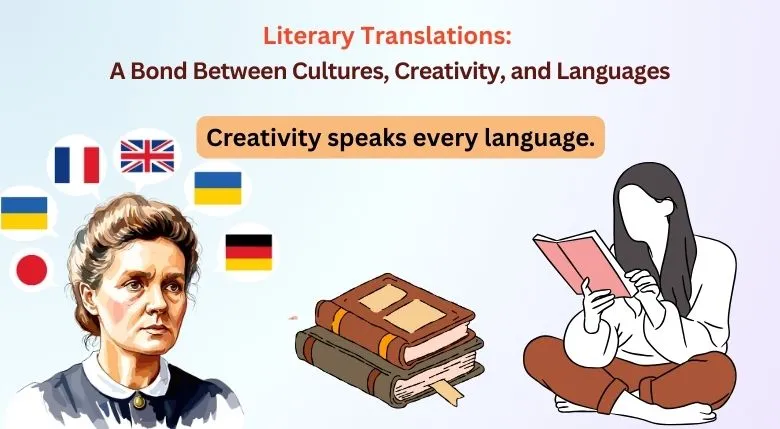
 Words carry immense power. They shape culture, preserve history, and share ideas across generations.
But can you imagine a world where a compelling story, a thought-provoking novel, or an important official document is just confined to one language?
Millions or perhaps billions of readers won’t be able to access the beauty of the words used in these texts. However, what if the words can be translated into several languages? Literary translations do just that. They bridge communication gaps to ensure a story is heard across the world, improve accessibility of literary text for several communities, and help to preserve valuable knowledge throughout generations.
From literature such as novels and poetry to official documents like immigration forms, accurate translations ensure that the language does not remain a barrier but a means of clear communication.
This blog will uncover the world of literary translation services for books, their uses, some challenges, and tips used by expert linguistic agencies.
What Are Literary Translations?
Literary translation is the process of converting creative and intellectual content from one language into multiple languages. All this while ensuring that the original text of the content remains intact.
Literary translations specialize in capturing:
- The emotional depth and artistic style of the content.
- Cultural elements and regional context.
- Wordplay, metaphors, and idiomatic expressions are used in the content.
Furthermore, literary translations are necessary for:
- Expanding the readership of books, novels, or poems.
- Preserving cultures and historical works throughout generations.
Professional language service providers specializing in literary translations play a key role in making literature globally accessible while maintaining the artistic integrity of the work.
Types of Literary Translations
Literary translations can be categorized based on the content and purpose:
- Novel and Fiction Translation: Used for novels, short stories, and prose narratives that require style-sensitive translations.
- Poetry Translations: A tricky type of translation that emphasizes using alternative language-specific words, rhythm, rhyme, and emotion. For example, translations of several pieces of Vedic literature, like the Skand Puran and Vishnu Puran, from Sanskrit to Hindi and English, are often tricky due to the depth of words used.
- Academic and Religious Literature Translation: These include scriptures, scholarly texts, and historic manuscripts and are mainly used for preservation. For example, Guru Granth Sahib, the central religious scripture of Sikhism, was translated into the Arabic language in recent times. The translation ensured that all religious sensitivities were accurately captured and the core message of the religion was properly articulated.
Literary translations are also vital to ensure compliance while preserving clarity.
Challenges in Literary Translations
Some common challenges faced by literal translation services for books include:
- No/Lack of Direct Equivalents: Words or phrases in the original language may not have an exact translation in the target language. This is a common challenge faced by Hindi literary translation services, as many Hindi words do not have a direct equivalent in other foreign languages.
- Cultural References: Translating cultural references unique to a region for global readers is a challenging task. This involves translators with high knowledge of idioms, traditions, and the historical context of both the source and target cultures.
- Original Author’s Style and Tone: Maintaining the original literary voice while translating can be complex. While writing a novel, an author sets a certain environment and mindset that needs to be perfectly replicated in its translations.
- Creative Context: Content like poems and fictional novels requires creative interpretation because word-for-word translations do not capture the original flow. Therefore, novel and fiction translation services are preferred over general content translation services in this situation.
- Names and Regional Variations: Let’s imagine a Spanish poem with local names like Miguel and Hernandez that needs to be translated into Hindi. Literary translations often face the confusion or dilemma of changing the name to make it relevant to the target language (Hindi in this case).
Did you know that Oscar Wilde’s popular work “The Importance of Being Earnest” required special attention while being translated into Italian? This was because the entire plot was based on tricky wordplays, puns, and humor specific to British culture.
Are you interested in knowing which ten books have been translated the most throughout history? Check out our related blog to know more: Book Translations: Ten Most Translated Works in History.
Looking for Exceptional Literary Translations?
Contact Somya Translators Today for a Free Quote!
Best Practices in Literary Translations
Expert document translation services that specialize in books, novels, and poems implement the following tips to ensure high-quality results.
- Faithful Translation: Translations must be done while capturing the author’s intent, style, and emotion without altering meaning.
- Cultural Sensitivity: Translators must understand the cultural context to maintain relevance in the target region.
- Adaptation and Not Alteration: It is vital for novel and fiction translation services to regionally and culturally adapt the content and not just provide direct translations. By doing so, they can ensure the text is accessible while preserving the original message.
- Collaborative Approach: Consulting authors from the target region or language experts to clarify references will ensure that translations are clear and not ambiguous.
- Attention to Style and Tone: Before attempting the translation, it is necessary to recreate the style, rhythm, and literary devices used in the original text.
- Multistep Review: By conducting a review of the translation, professionals ensure iterative refinement of the content.
- Reader’s Feedback: Feedback from the readers is vital to understanding how to refine the translations and make them more relevant to the specific target group.
By following these expert tips, literary translation services for books ensure authenticity and clarity across several languages.
How to Find Expert Literary Translations
Finding suitable literary translations that meet your expectations can be tricky. Always consider the following criteria:
- Proven experience in literary translation services for books, novels, and other literary texts.
- Expertise in Indian languages like Hindi, Tamil, and Marathi, and foreign languages like Spanish, Italian, German, Arabic, and Chinese.
- Ability, certification, and expertise to handle official translation for immigration papers.
- Use of culturally relevant expressions and idioms in translations.
Somya Translators, a leading ISO 17100:2015-certified literary translation service, stands out when it comes to providing high-quality results with precision and cultural accuracy.
We offer:
- Literary translations for novels, poems, books, and scholarly works.
- Official document translation for immigration papers and certificates.
- High-quality results in 170+ languages.
- Other effective services, such as Tamil certificate translation for immigration.
We believe that literary translations are more than just linguistic projects. They are an opportunity to connect culture, encourage creativity, and preserve history. And with the right expertise, language becomes an efficient tool for this connection.
Do you feel that your story, document, or message deserves to be understood globally?
If yes, then contact Somya Translators today!
Call: +91-11-43061918
Email: info@somyatrans.com