

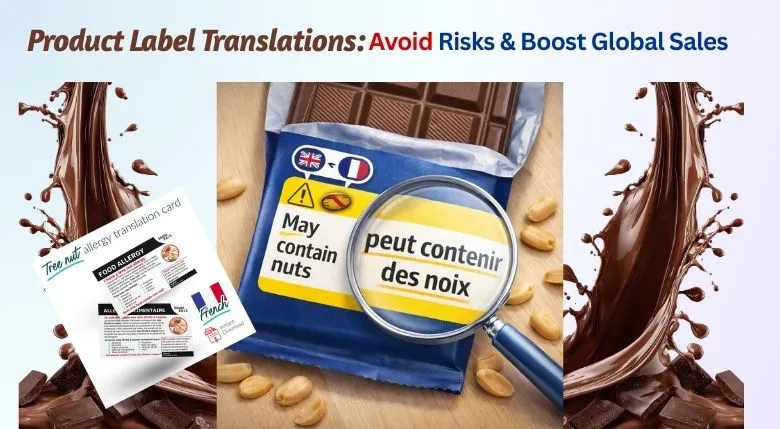
A mistranslated label is not just a minor typo. Some brands think of machine translations for their product labels, but doing so leads to major consequences.
For example, a UK chocolate business, when translating to French, converted the term “may contain nuts” into “peut contenir des noix.” The problem?
“Noix” in French means “walnuts” and not simple tree nuts. This led to confusion and misrepresentation of allergen information.
Now let’s imagine the following high-risk scenarios:
- An allergen warning is translated incorrectly. Like the example we discussed above.
- Dosage information is misinterpreted.
- Incorrect temperature storage instructions.
While small translation errors can lead to:
- Consumer harm
- Public backlash
- Expensive product recall
- Loss of distributor partnerships
Accuracy in Retail packaging translations protects both consumers and brands.
An efficient way to ensure accuracy and scalability is by using MTPE services. This specifically combines the speed of machine translations and the expertise of human linguists to translate high-volume product labels accurately and efficiently.
Common Challenges in Product Label Translations
Despite attempts to translate product labels into other languages, businesses face several challenges:
- Space Constraints: Some languages require more words to convey a sentence. For example, German and French often expand beyond English word counts. This can affect spacing in packaging designs.
- Technical Terminology: Packaging labels of medical, pharmaceutical, and electronic products require high subject-matter expertise. Using general translators may not be ideal for understanding technical terms.
- Cultural Sensitivity: Colors, symbols, and phrases used in a product’s label can have different meanings across cultures. They need adaptation according to the culture they target.
- Regulatory Updates: Laws evolve quite drastically. What was compliant last year may not meet the current standards.
- Volume and Speed: Managing translations across dozens of markets and languages can be overwhelming and susceptible to errors.
Professional product label translation services help address these challenges with structured workflows, terminology databases, and expert linguists.
Translate Product Labels into Multiple Languages!
What Do Effective Product Label Translations Look Like?
Accuracy, compliance, and cultural relevance are the three pillars of expert product label translations. However, to achieve this, businesses must follow these proven strategies:
- Work With Industry Experts: It goes without saying that choosing specialized packaging translation services to translate product labels for food, pharmaceuticals, cosmetics, electronics, and consumer goods is the best course of action.
- Prioritize Regulatory Research: Before launching a product in a new market, it is vital to understand the mandatory language and regulatory requirements of the region.
- Maintain Terminology Consistency: The translated terms, especially the specialized industry terms, must be consistent across the product label. This could be achieved by using glossaries and style guides that are validated by industry experts.
- Combine Technology with Human Review: Product labels are generally high-volume and repetitive content. Using AI tools can improve the speed and scalability of translations. However, it is vital to use expert human linguists to verify the translated content. This includes validating the context, safety instructions, and regulatory accuracy.
- Adapt and Don’t Just Translate: Proper multilingual product labeling consists of layout, images, tables, and numbers. Merely translating them isn’t enough. Adapting these elements according to market requirements is necessary to achieve true clarity.
- Always Plan Ahead: Product label translations are always supposed to be pre-planned, especially when the product is being launched in a foreign market. Building translation timelines that match the product launch and contacting expert translation services beforehand can help a company avoid hurdles.
Turning Language into an Advantage
The global competition is so high that brands need every tool at their disposal to gain an advantage over others. Speaking the language of the target market is one such vital advantage. Speaking the same language as your global consumer is directly tied to consumer safety, regulatory approval, and brand trust.
With strict government laws and rising consumer expectations, partnering with professional product label translation services has become a vital necessity.Somya Translators is one such professional who not only specializes in product label translations but also in providing expert e-commerce translation services in India. We combine linguistic knowledge and industry expertise to provide accurate and compliant translations for packaging and product labels.
Do you want to confidently enter a new market while your product speaks the native language clearly? Trust Somya Translators!
Contact us today for a free quote!
Call: +91-9990094796
Email: info@somyatrans.com